
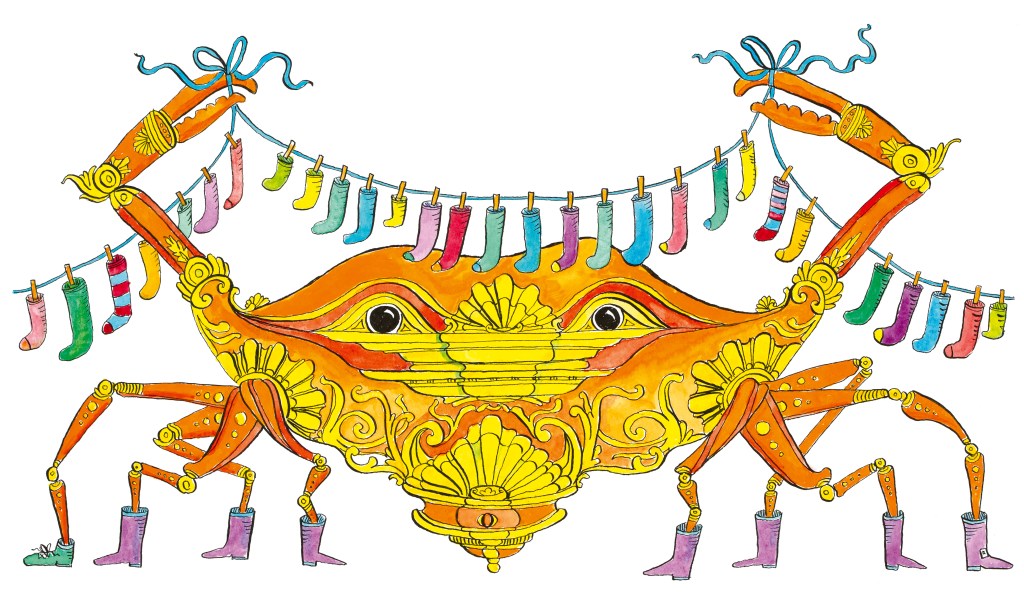
Photo © Daniel McKay; Whimwondery p.70-71, Triglyph Books
How does an academic find casual comfort in bookish things? The usual answer may want to blur the lines between otium and negotium, wondering whether the two can ever quite be pulled apart in a city like Cambridge, where the pipeline from evening seminar to pub trip is (perhaps delightfully) slippery indeed. But in the case of Daniel McKay, the distinction is clear, and wonderfully so. Now a Bye-Fellow at Emmanuel College, overseeing the extra-curricular and cultural offerings of the college, it was McKay’s penchant for doodling (his ‘scribbles, scroobles, and stories,’ as the Whimwondery X account puts it) which offered him respite during a serious History PhD on the Colonial and Imperial Conferences; even further back, growing up in rural New South Wales with no lack of imagination, drawing was the outlet in which McKay’s constructed mental worlds (outside his actual world, the family cattle farm) would run riot on the page. Initially consisting of images and descriptions uploaded online to his blog, Whimwondery in its printed form, for which McKay was given total creative free reign, has no shortage of his verbal and visual panache, with nods to his geographical journeys along the way: the University of Cowpuddle sounds somewhat familiar, even without an etymological deep-dive on Wiktionary, but some references, like the letter Z’s ‘Zirdlestone’, referring to a memorable tombstone McKay came across in rural Norfolk, are more delicate.
Silliness and erudition go hand in hand for McKay, not least in his ‘uncategorisable’ book. Allusion is meant to be playful, he reminds me, language mischievous. There’s no use in a word or name simply existing on a page, as if erroneously dropped there. And as a man of his word, every letter of Whimwondery’s ‘alphabetarium’ has McKay’s light-hearted, learned touch imbued in its narratives and drawings. The poems of the ancient ‘Posippiddus’ (the Greek name intentionally misspelled for the eagle-eyed classicist) inspire the life’s work of the fictional Professor Peregrine Prufrock-Parker – all five of them (the real Posidippus’ oeuvre may be small, but it is mighty). Augustus Pugin forms the architectural underpinnings of the book, inspiring the Gothic lettering and end-pages. Asked if he was on a mission to assemble a group of fellow nonsense writers, McKay calls it less of a mission, more of an aspiration. In the meantime, he feels in good company with past proponents of nonsense: ranging from the wit and rhyme of Edward Lear and Edward Gorey, to the ludic language of the abecedaria he was able to access at the Cambridge University Library, charting linguistic play through the ages from the 15th century onwards, McKay’s inspirations are wide-ranging indeed. The liturgical MS. Add. 4125, a Latin abecedarium interspersed with French, with fluid gold capitals amidst red and blue lettering, remains a particular favourite.
McKay tells me he often surprises friends across the dinner table with doodles he’s made over the course of the meal. These endearing tokens arrive on the back of menus, loose napkins, any available surface in need of some detailed, ornate whimsy. As we leave Café Gusto, the random (albeit charming) St. Andrew’s Street location I chose for our chat, I am given another version of McKay’s generous gifting: my very own copy of Whimwondery, addressed to my name in calligraphy on the opening page. ‘I thought hard about what would make a good accompanying adjective,’ McKay says, ‘an alliterative one, too.’ (Kafkaesque? Karmic? Kind? Kooky.) As my (verbal) parting gift, I tell McKay about an epigram by the Hellenistic poet Aratus I had spent a good chunk of my term thinking about. In it, Aratus addresses a pitiful schoolteacher, Diotimus, who spends his days taking children through alpha and beta, that is, the start of an abecedarium. Turning the tide on alphabet ‘teaching’, Whimwondery, I assure McKay, has the potential to make the ‘alphabetarium’ seriously cool, among his intended audience of childish adults and adult children no less (that is, everybody). He laughs it off, saying he would be so lucky if more people thought similarly. Even without a new wide-spread age of literary nonsense at our fingertips, in one book at least, we can rest assured that whimsy and wonder are alive and well.
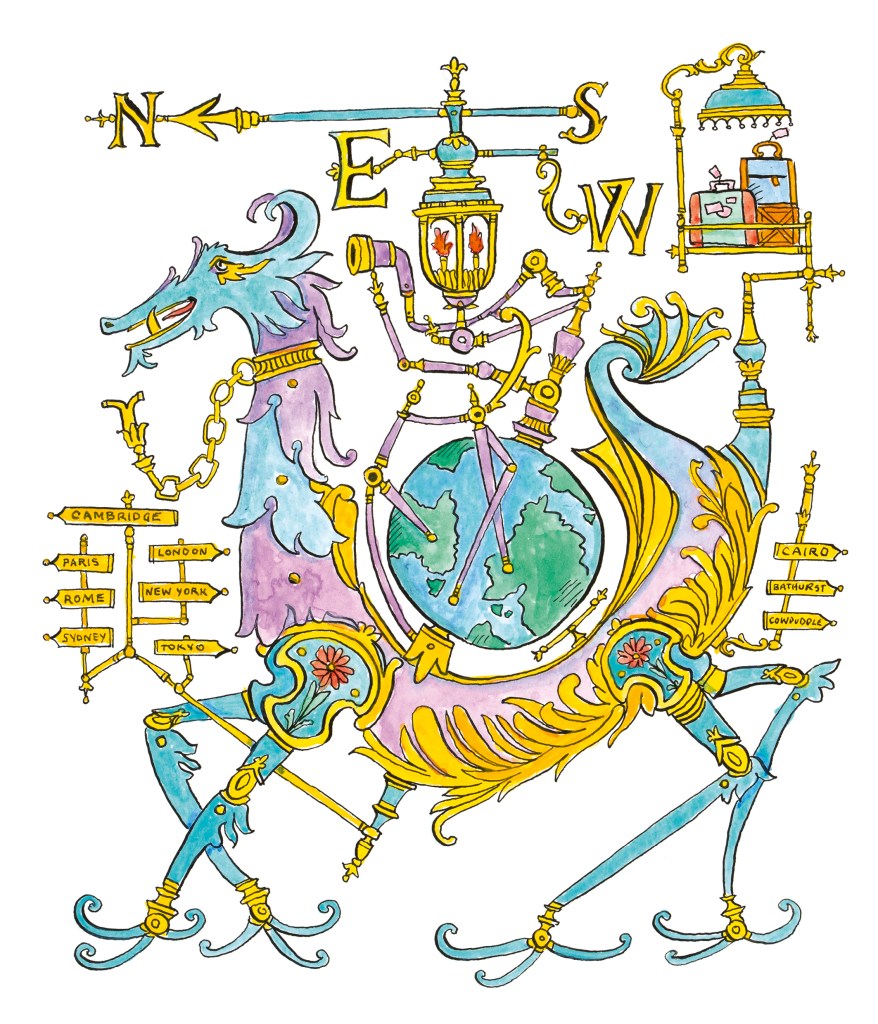
Photo © Daniel McKay; Whimwondery p.111, Triglyph Books
By Kiana Rezakhanlou
 The Camera