
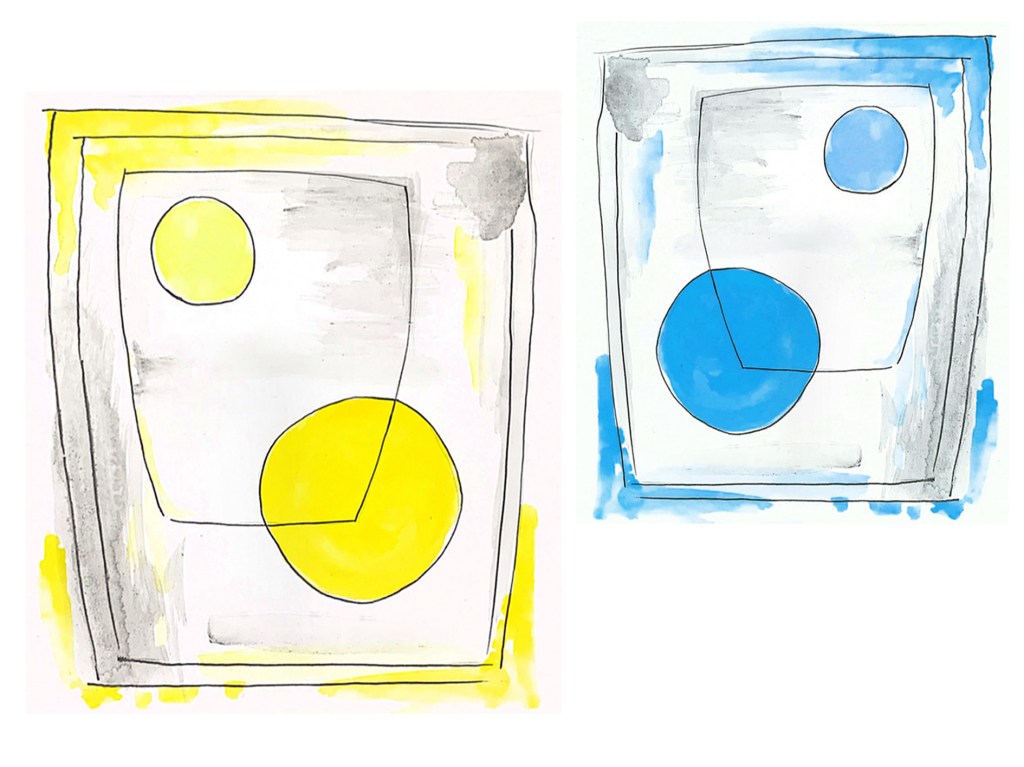
Art by Elizabeth Murphy.
Phone signal is not something I imagine Robert Macfarlane has that often. I think of him perpetually either atop a mountain, crawling in Mesolithic caves, or ambling through woodland in-between; the nature of his writing demands a certain peripatetic existence. So, when my phone rings, and he is speaking on a lunch break from rehearsal a few miles south of Cambridge, before his show with Johnny Flynn that evening, it feels a rare instance to catch him on flat ground.
A ‘nature writer’ in the broadest possible sense, Rob strikes rangier paths into kindred forms of film, protest, and song. He roves equally across professions, from author and academic (he is Fellow in English at Emmanuel College, Cambridge), to campaigner and lyricist. It is in this latter capacity that he is performing in Cambridge with Flynn, for the tour of their latest album The Moon Also Rises (2023). “Over the last five or six years, I’ve worked a lot with musicians of many kinds,” Rob says. Along with his and Flynn’s debut album Lost in the Cedar Wood (2021), earlier this year, Rob released the album Night Creatures with HOWL, a nine-voice female and non-binary choir; he has worked with an ensemble of “folk superstars” on two albums of ‘Spell Songs’, borne from the wildly successful The Lost Words (2017), a children’s book he co-wrote with Jackie Morris to recover nature words being dropped from a widely-used children’s dictionary; and “I’ve written lots of other occasional songs here and there, too,” Rob ruminates, then laughs. “I think a dam broke in me.”
Rob’s partnership with Johnny has an uncanny quality: “Long before we met, I was listening to his music, and it turned out that he was reading my books.” Rather prophetically, one of Rob’s books, The Old Ways (2012), was going to have the lyrics from ‘The Ghost of O’Donahue’ – his favourite of Johnny’s songs – as the epigraph: “routes might change, but all that remains is the pull from place to place.” “A few years later, our paths crossed,” Rob says, “and it felt like meeting an old friend.”
They began collaborating swiftly. “The way we work is very improvised, and we found ourselves to be very naturally at ease with each other’s working methods.” Initially working together in more minor ways and on smaller projects, it was in the unexpected time and space the pandemic provided that allowed them and their work to flourish. Lost in the Cedar Wood grew in a rather vegetal manner, blooming from the scattered exchanges of WhatsApp messages. “I would often start the lyrics for a song, just with a chorus or verse or even a single line, and then I would send that to Johnny, and he would ping it back with a few more lines or another idea, and then we’d build a verse, build a chorus.” Rob paints a warm picture of the domestic scene: the Macfarlanes clutched around the breakfast table listening to the first scratchy voice demo, the Flynn children screaming for marmalade in the background.
Johnny’s raw, crackling brand of English folk, impossibly both raucous and pensive, brings a vibrancy to their co-written lyrics. “Johnny really is this radiant being, a sort of golden soul, as well as having this explosive performance talent and it’s just pretty extraordinary to be alongside.” Rob, it seems, is a tad wonderstruck to be his compatriot. “There was an intimidation in just joining [Johnny] and seeing what I could bring to the partnership, because I couldn’t really bring music.” For a brief moment, I think he is selling himself short. Instead, to my surprise – and it seems a surprise to him, too – he animatedly tells me of his recent injury from an over-eager use of the tambourine. “If you hit a tambourine really hard on the upper part of your hand, you bruise it quite badly.” (“I hear it’s all in the heel of the palm.” “Yes! It’s all in the heel of the palm.”) So, apart from the budding career as a percussionist – “my great moment as Bez from the Happy Mondays has finally arrived!” – Rob’s responsibilities have been kept to some choral yelling on ‘Home & Dry’ and dropping a cutlery basket.
Lyrics, however, have proved their own rich and curious challenge; Rob thinks of them “almost like a like a magic lantern show where you’re flickering slides one after the other upon the mind, the mind’s ear.” They operate through associations, a dynamic ability that exists outside the world of prose that Rob usually inhabits. “I suppose you could say that I learned to unlock cause and effect as a structuring principle, which is so central to critical writing, so causally organised,” Rob says thoughtfully. “Johnny very gently taught me that you don’t have to make everything add up. You don’t even have to adhere to grammar.”
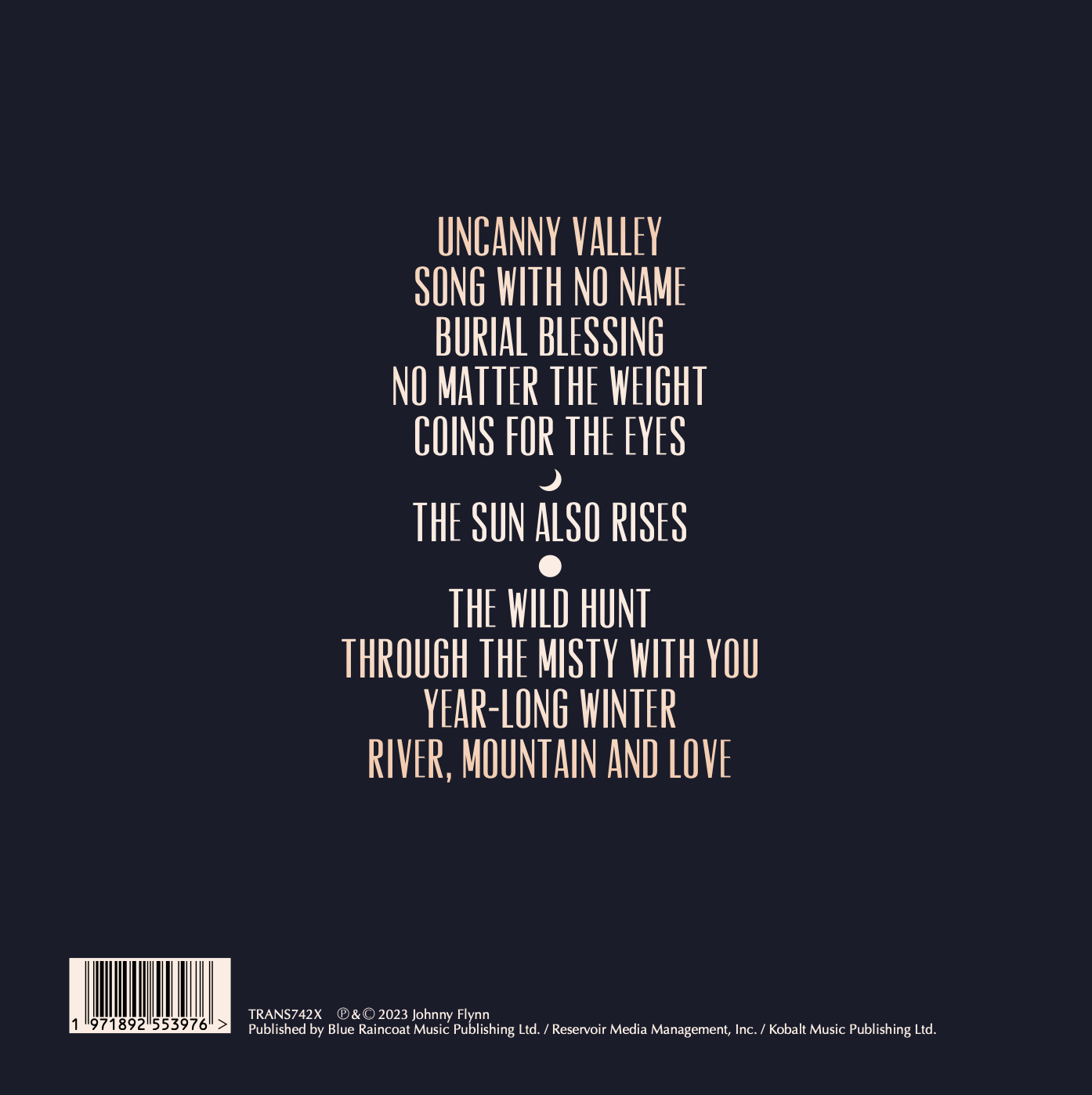
Rob’s prose works are long, structured by topographical, etymological, and historical lines. They are above all formed by his own movements. A sensitivity to rhythms of motion across the earth percolates into each book, and now into his songwriting methods. ‘Song with No Name’ (a song which, amusingly, Rob briefly forgets the name) was walked into being on the South Downs. “We were talking about the three beats, the three rhythms of the body: the breath, the heartbeats, and the beats of the replaced and lifted foot, footfall. We wanted to write a song that was about memory and future on the path while walking, as it were, that had those 3 rhythms at its heart.” The overarching architecture of the album, too, seems in tune with earthly rhythms, be it diurnal, seasonal, solar, or lunar. The album can be loosely split in two, with the track ‘The Sun Also Rises’ acts as a pivoting point, a shift from burial to rebirth, “a movement out of shadow and into light into the sun”.
An atavistic concern subtends these permanent cycles. Lost in the Cedar Wood was a retelling of the Gilgamesh myth, the oldest story in world literature. The Moon Also Rises likewise criss-crosses time and place, fusing ancient story with yesterday’s strolls along the River Lea. These are songs for our times that are thick with time, made of time. The communion between past and present prompt unexpected conversations that bear fascinating urgency. “A lot of people are talking now about how AI is really overwhelming so many of the creative industries,” Rob says. And so, against these anxieties, he thinks the “older forms of storytelling and song and the liveness of live performance, which AI can’t replace, are going to thrive.” “It’s interesting to think about this very old form, simply of us telling a story and singing a song together gaining that kind of traction.”
Urgency is an unavoidable background to almost every aspect of Rob’s work. Environmental breakdown forms the spinal polemic across his teaching and writing. When we speak, he is just finishing a book about the rights of nature, in particular the lives and deaths of rivers. Where does he see his lyrics in relation to this more frontally political work? “I don’t see them as distinct,” Rob answers. “They are all part of a broader terrain of work. […] I guess different forms find different voices or different voices find different forms.”
“I would never describe [my songs] as activist, or even probably as campaigning,” Rob explains, “I think it’s a kind of honouring, really, celebrating and reminding us of the older, deeper rhythms that the world still moves by and that we are moved by.” Lyrics are companions or siblings to the work he does as a teacher, where rather than straightforward arguments, these songs take a “softer, gentler form”. It seems he is most concerned with preserving wonder – reconnecting, at times creating, the enchantments between language and landscape – but recognises that in doing so, he deals in the inscrutable. “Culture moves people in strange ways and has these deep convection currents that bring unexpected water to the surface. We’re not really trying to predict an outcome for this. We just want to make the work, as it were.”
The end of the lunch break is nearing, and I indulge in some curiosity. What sort of music does he like to listen to? When writing, Rob tends to listen to Max Richter and Philip Glass – “just moving away on their harmonic iterations” – or something like This is the Kit. How about the pre-show playlist? “We’ve been listening to a lot of what’s called ‘bard core’, which is basically like heavy metal meets hurdy-gurdy.” Somehow this confession is delivered without any hint of cliché.
We are speaking on one of the first proper days of spring, a riot of sunshine and sudden greenery. I wonder if there is a sound in nature he likes best. “I’m fascinated by birds, [but] I’ve always found it hard to learn [their songs]. I’ve got my sort of repertoire of six or seven or ten birds pretty solidly, but the Merlin app has really helped sharpen my ears.” Now, when writing “I just take the buds out and listen to the pretty fabulous goldfinches in our garden. And there’s a very, very noisy wren as well.”
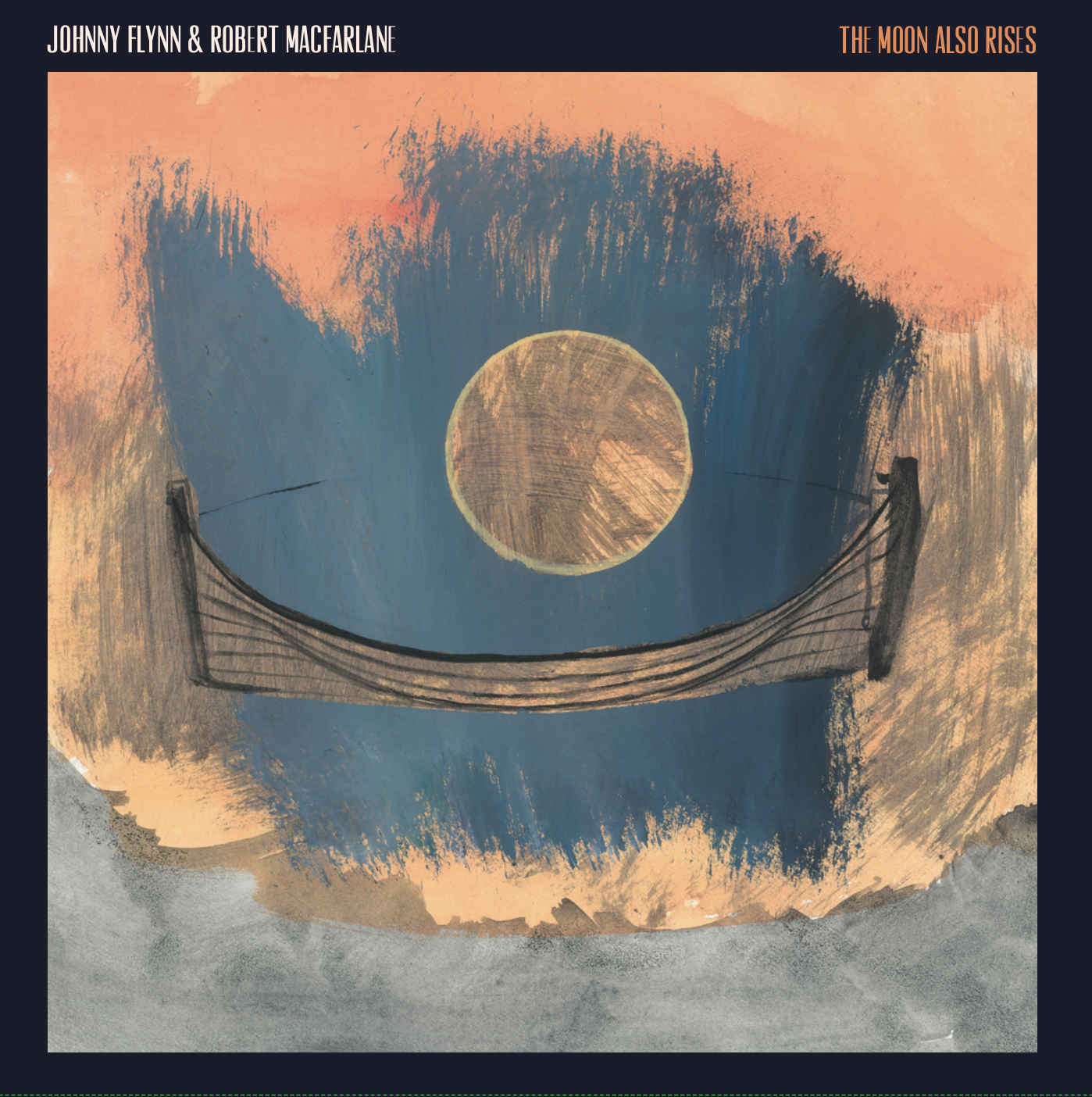
Robert Macfarlane and Johnny Flynn’s album, The Moon Also Rises, is out now via Transgressive Records.
By Elizabeth Murphy.
 The Camera